

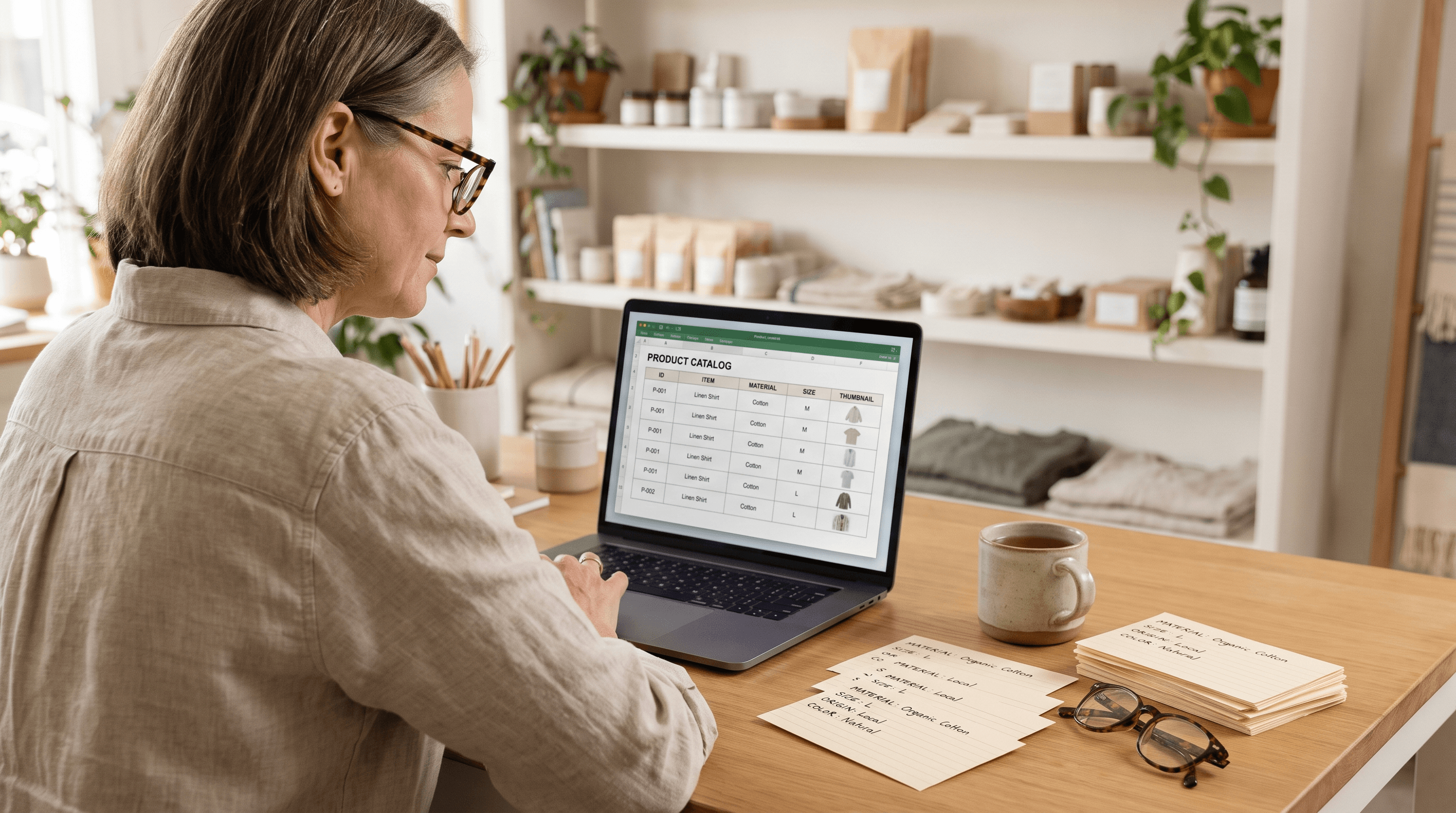
Shopify Is Building for Agentic Commerce: Is Your Product Data Ready for AI Shopping Agents?
Shopify Catalog now feeds product data to ChatGPT, Copilot, and Gemini automatically. Here's what merchants need to fix before AI agents recommend a competitor instead.
Every Shopify storefront now connects to its products through the Shopify Catalog by default, a structured data layer that standardizes product information and syndicates it automatically to ChatGPT, Microsoft Copilot, Google AI Mode, and Gemini. There's nothing to configure; if your products are eligible, they're already listed. The catch is that eligibility and quality are two different things, and the merchants whose data is a mess are about to find out what that costs them in a channel they can't optimize the old way.
Why This Isn't Just SEO With a New Name
A human shopper browsing your store forgives a lot: a photo that's slightly off, a description that's a little thin, because they can still see the product, read reviews, and use judgment. An AI shopping agent doesn't browse the way a human does. It reads structured data, titles, descriptions, images, pricing, inventory, shipping speed, and uses that to decide what to recommend and in what order. Nosto's 2026 survey found 72% of consumers now expect AI shopping agents to help them shop online, and Google reports a 10%+ increase in search volume for query types that trigger AI Overviews. This isn't a future channel to prepare for eventually. It's already routing a meaningful and growing share of product discovery.
One consultancy working on agent-readiness put the disqualification risk bluntly: "An AI agent choosing between 30 merchants in your category will filter on data completeness before it ever gets to price or reviews. Incomplete data is not a ranking disadvantage. It is a disqualification." That's a meaningfully harsher failure mode than traditional SEO, where a weak listing still shows up, just lower. An agent that can't parse your product data may not surface it at all.
What Agent-Ready Product Data Actually Requires
The requirements converge across every technical breakdown of Shopify Catalog and the Universal Commerce Protocol (UCP) that now underpins agentic checkout:
- Complete titles with brand, category, and the specific differentiator that matters (material, size, use case), not marketing copy that reads well to a human but tells an agent nothing structured
- Category-specific attributes: material, dimensions, compatibility, certifications, whatever a shopper in your category actually filters on
- Accurate, real-time pricing and inventory, since agents can only recommend confidently on data they trust to be current
- Clear, decision-ready descriptions that explain use cases and benefits in plain, specific language rather than vague positioning
- High-resolution images that meet platform standards, still a factor even in a text-driven recommendation flow, since many agent surfaces render the product visually once selected
None of this is new advice in isolation. It's the same discipline good SEO and marketplace optimization always required. What's changed is the stakes: a merchant who's been coasting on thin product descriptions because their theme and photography carried the conversion could find those same listings simply invisible to an AI agent doing the recommending.
Where Video Fits (and Where It Doesn't, Yet)
It's worth being precise here rather than overselling: current agentic commerce protocols are built around structured text and image data, not video. An AI shopping agent isn't watching your shoppable video to decide whether to recommend you. That means video's role in this specific channel is currently indirect, converting the human once they click through from an agent's recommendation, not influencing the recommendation itself.
That indirect role still matters. If an AI agent surfaces your product and a competitor's side by side, the product page each recommendation lands on still has to close the sale. A page with a clear video demo, tagged and shoppable, converts that AI-referred visitor at a meaningfully higher rate than a page with only static images, the same 9x-lift dynamic that applies to every other traffic source. Agentic commerce changes how a shopper finds you. It doesn't change what convinces them to buy once they arrive.
The Practical Checklist
- Audit your top 20 products' titles and descriptions for completeness, not just SEO keyword presence. Would a system with no visual judgment understand exactly what this product is and isn't?
- Fill in every structured attribute your theme and app stack support: material, size, compatibility, whatever applies to your category.
- Confirm your inventory and pricing sync in real time, since stale data is a fast way to get filtered out of an agent's recommendation set entirely.
- Make sure the product page an agent-referred shopper lands on still closes the sale, which means the video, reviews, and trust signals that already convert your other traffic need to be there too. See our two-layer video strategy for how to combine AI-generated and real customer content across every page type.
Preparing for Both Channels at Once
Agentic commerce and on-site conversion aren't competing priorities, they're sequential ones. Clean product data gets you recommended. A store built to convert once someone arrives is what turns that recommendation into a sale. ReelTok handles the second half: shoppable Stories, Carousels, and Floating Reels that tag directly to your product catalog, so however a shopper finds their way to your product page, whether through search, social, or an AI agent's recommendation, they land on a page built to convert, not just inform. Try ReelTok free and make sure the page an AI agent sends traffic to is ready to close.
Related articles
More from AI & Personalization

Your Shopify Store Can Now Hand Its Cart to an AI Agent: What WebMCP Changes
Shopify quietly turned on WebMCP for every Liquid storefront in August 2026, letting browser AI agents search, cart, and checkout directly. Here's what to verify.

New York's AI Disclosure Law Is Live: What It Means for AI-Generated Product Videos
New York now requires disclosure of AI-generated synthetic performers in ads. Here's what Shopify merchants using AI video need to know.
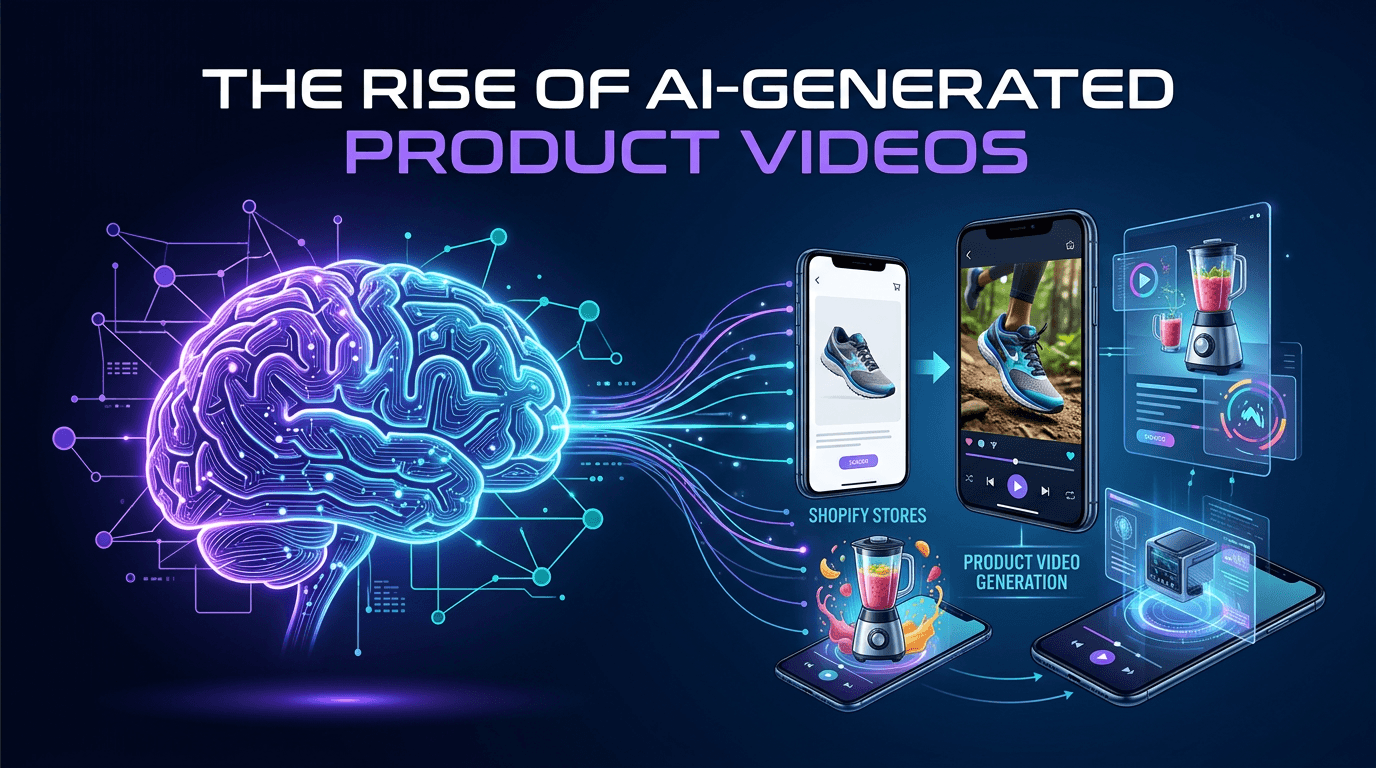
The Rise of AI-Generated Product Videos: What It Means for Shopify Stores in 2026
AI video tools can now create product demos from a URL. Here's how AI is reshaping video commerce for Shopify merchants.